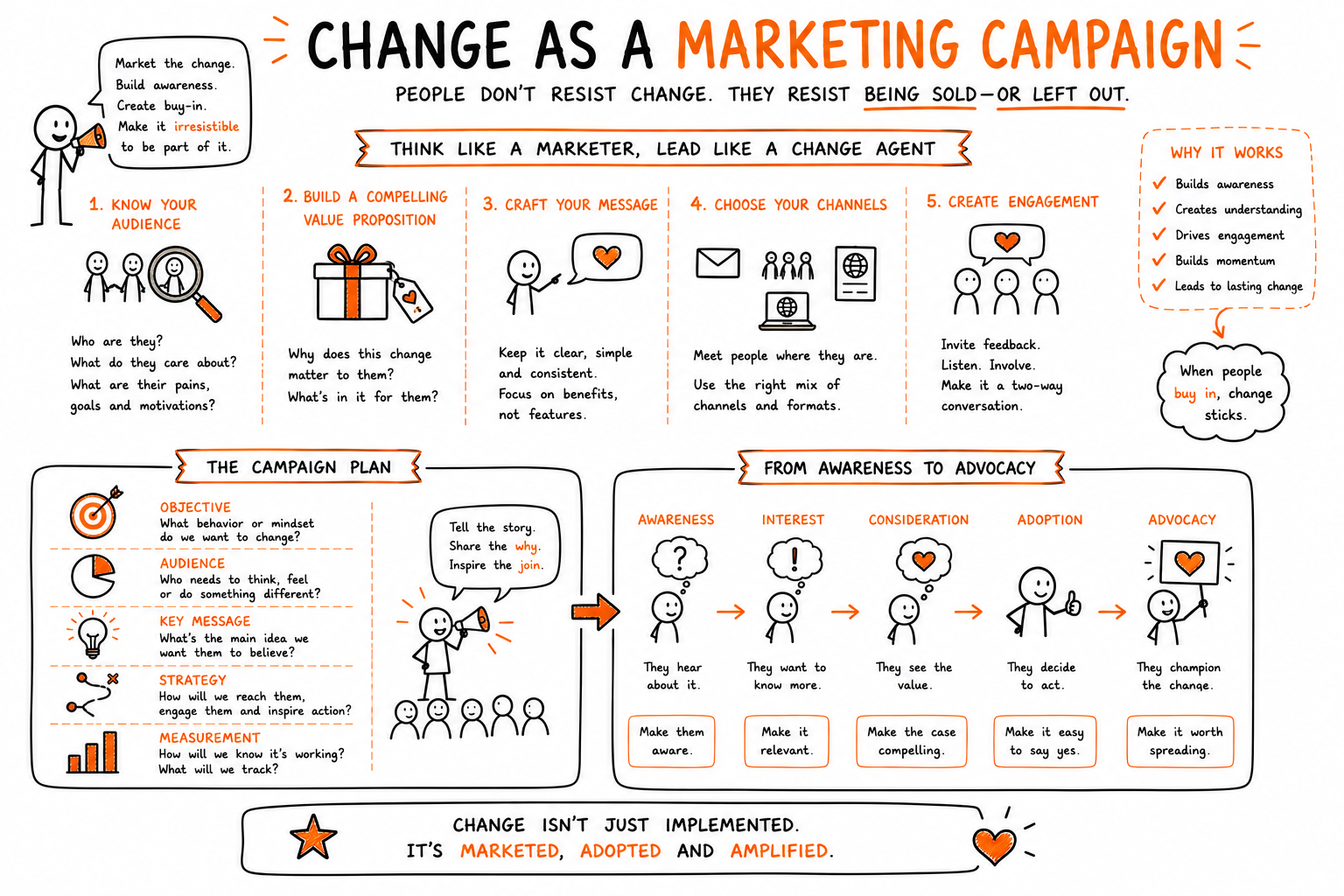
Seth Godin asks his marketing teams three questions: Who are we trying to reach? Why would they decide to support us? What do they need to make it happen?
When I heard this framing applied to organisational change, everything clicked.
Everett Rogers published "Diffusion of Innovations" in 1962. His research mapped how new ideas spread through a population across five groups:
The fatal mistake in change management is designing your rollout for the early majority while ignoring the early adopters. The chasm between those two groups is where transformations die.
When I am introducing a new way of working, I identify the two or three early adopters in the team first. These are the people who lean in during workshops, who already have opinions about the problem. I invest in them disproportionately.
I give them early access. I co-design with them. I let them become the internal advocates. By the time the early majority notices the change is working, they see a peer they trust endorsing it, not a consultant selling it.
A marketing campaign does not expect every customer to convert at the same time. It sequences its messages and touchpoints to move people through awareness, consideration, and decision at their own pace.
Change management should work the same way. Sequence your communication. Segment your audience. Do not use the same message for a sceptic as you use for an innovator. Give people a reason that matches where they are.
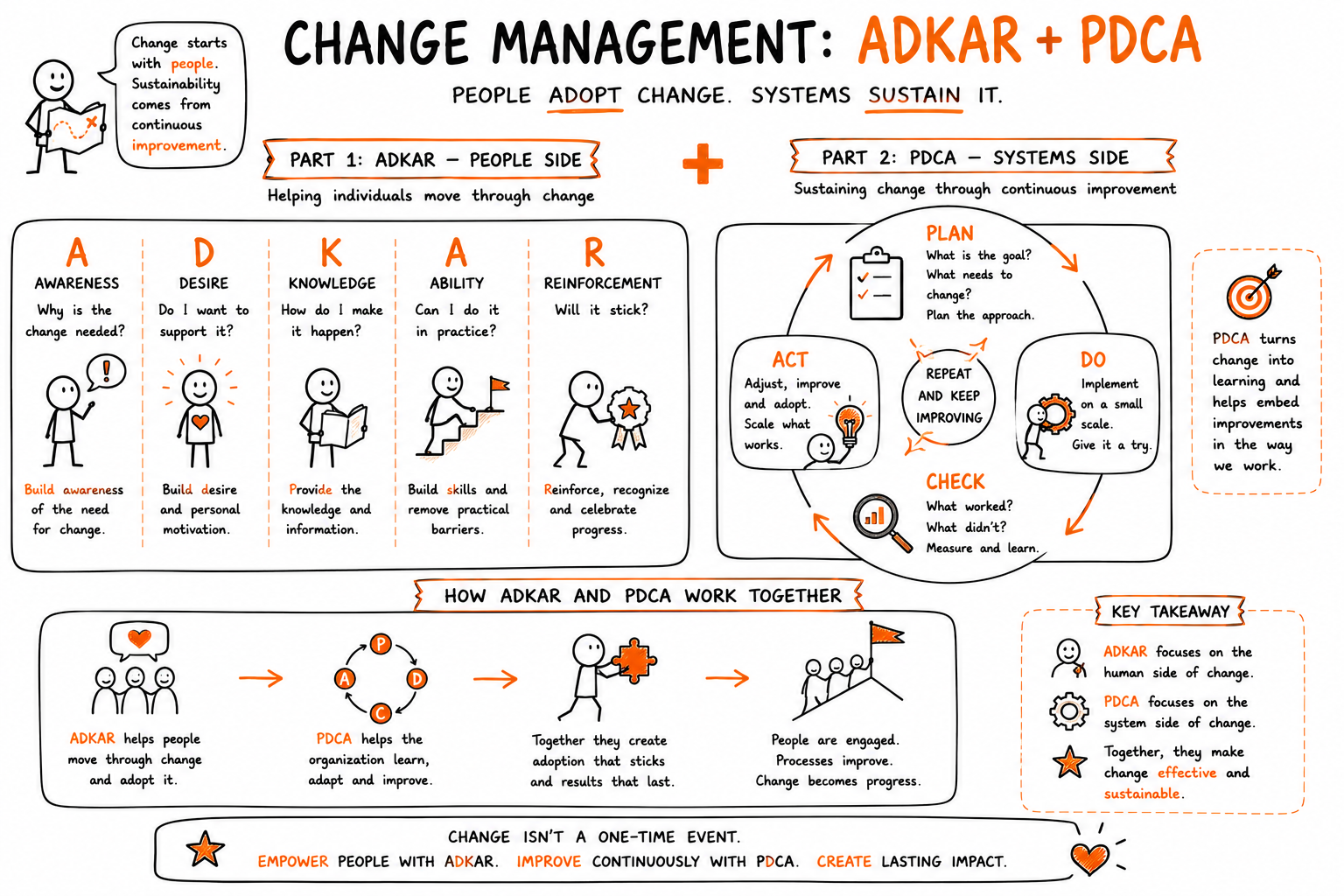
Change is not an announcement. It is a campaign.
Agile & Operations Consultant
Two decades driving transformations, scaling teams, and streamlining operations for leading organisations.
About Me