Every team I have ever coached has energy. The question is whether that energy flows toward things they can change or things they cannot.
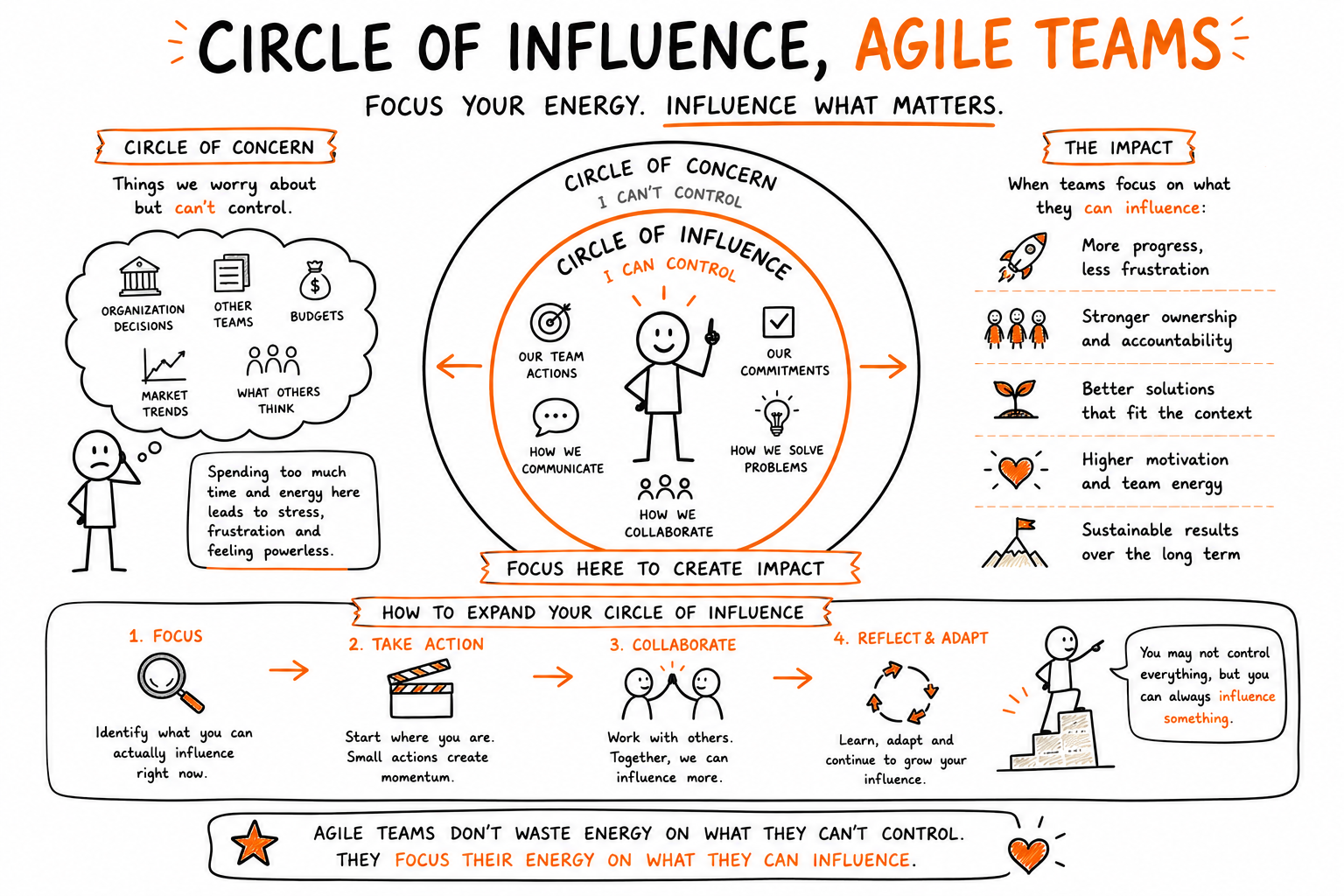
Stephen Covey described this in "The 7 Habits of Highly Effective People" through two concentric circles: the Circle of Concern and the Circle of Influence.
Circle of Concern contains everything you care about but cannot directly control. Market conditions. Senior leadership decisions. Budget cuts. The other team that keeps missing their deadlines.
Circle of Influence contains the things you can actually affect through your own actions, behaviors, and relationships.
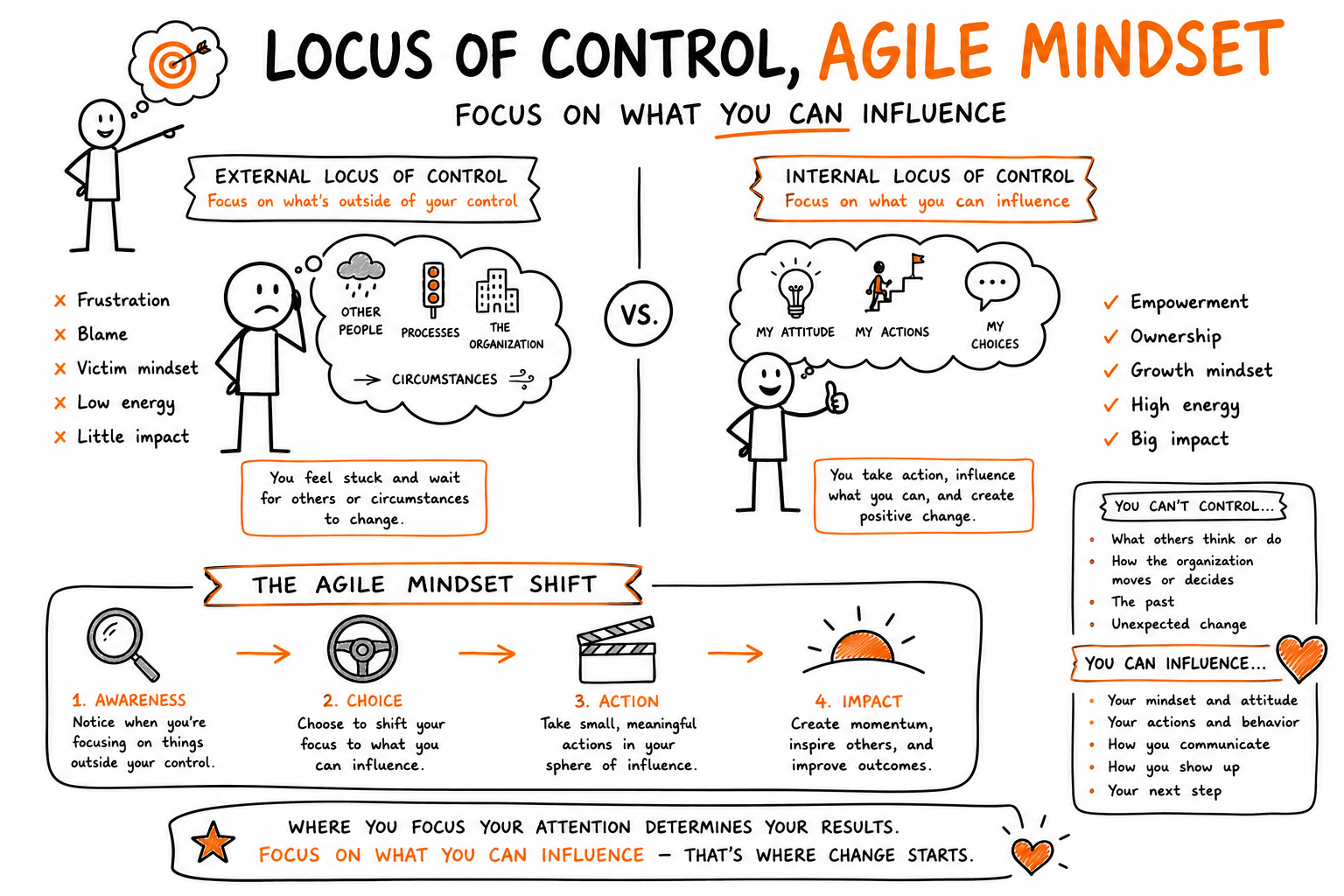
Highly effective people focus their energy on the Circle of Influence. This proactive focus causes the circle to grow over time. They gain more trust, more autonomy, more reach.
Reactive people focus on the Circle of Concern. They spend their energy worrying about, complaining about, and discussing things they cannot change. Their Circle of Influence shrinks. They become less effective and more frustrated.
In retrospectives, I watch for the language teams use. When a team spends twenty minutes discussing how product management always changes priorities, that is Circle of Concern energy. Legitimate frustration, but no action available from where they sit.
I redirect: What can this team do, in the next two weeks, that would improve this situation regardless of what product management does? Often there is something. A clearer definition of ready. A better refinement process. A written escalation protocol.
That is the Circle of Influence. That is where the team's energy belongs.
Covey also notes that influence is not always direct. Sometimes you cannot solve a problem yourself, but you can influence the person who can. Coaches operate almost entirely in this indirect space. We rarely make the decisions. We influence the people who do.
This is why relationship-building is not soft skill padding in an agile coach's practice. It is the mechanism of influence.
Draw the two circles on a whiteboard. Ask the team to map their current frustrations into them. Then ask: for everything in the Circle of Concern, is there any indirect action that could move it? The things that cannot be moved even indirectly are the ones you need to stop spending energy on.
This is not resignation. It is strategic clarity.

Agile & Operations Consultant
Two decades driving transformations, scaling teams, and streamlining operations for leading organisations.
About Me