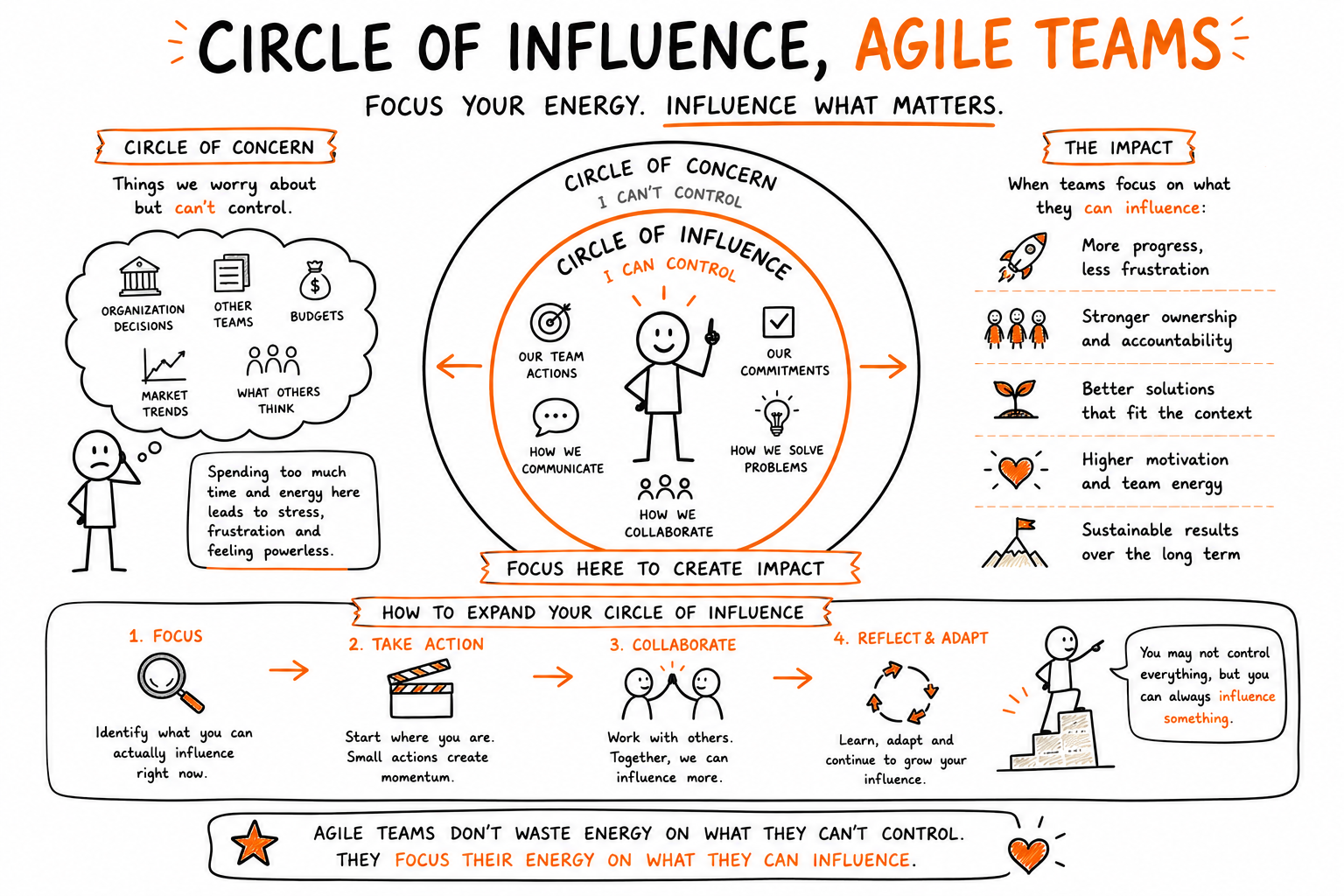
Self-organising teams are the aspiration of every agile framework. But after coaching dozens of teams, I have noticed that the barrier to self-organisation is rarely a process problem. It is a mindset problem, and specifically, it comes down to locus of control.
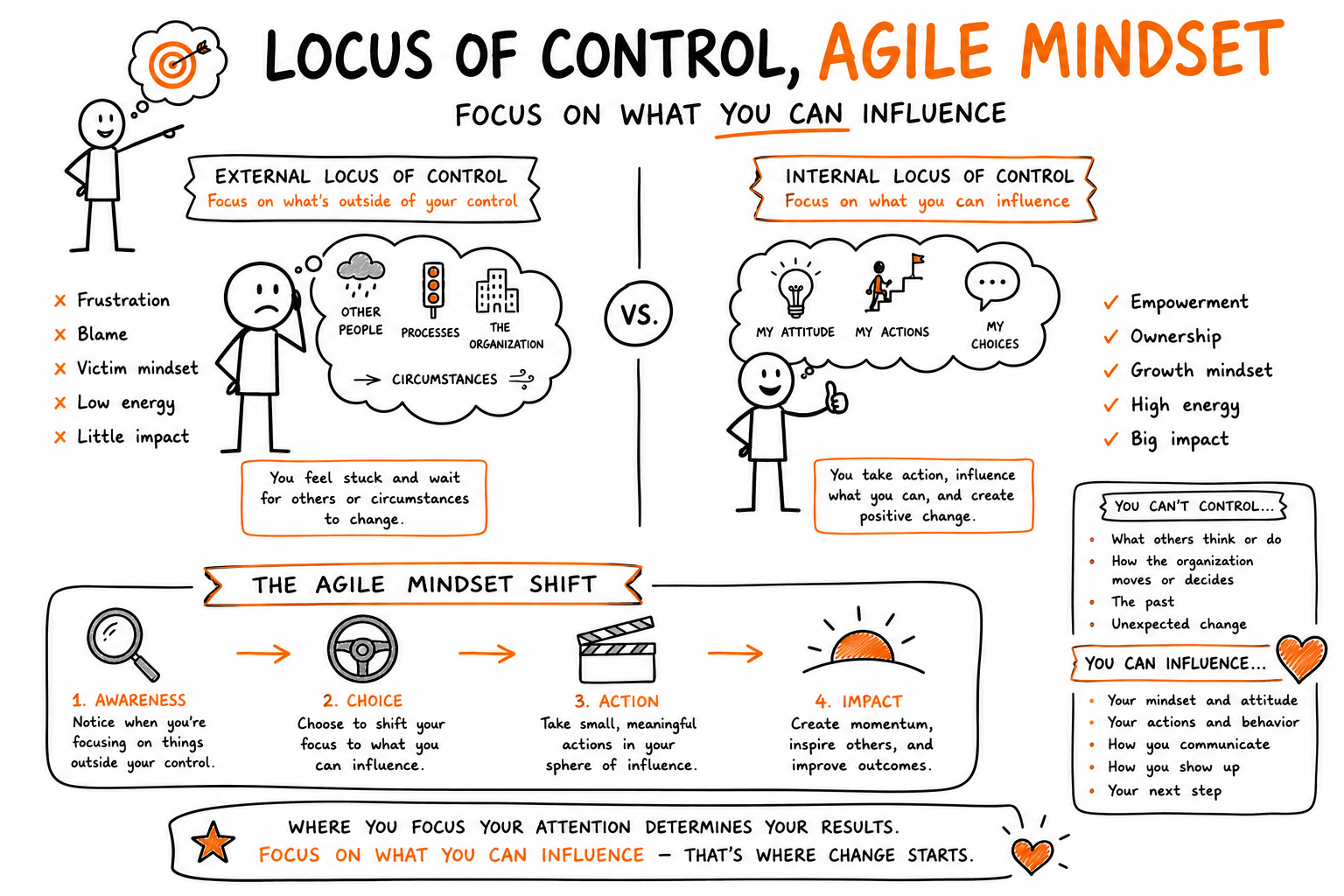
Psychologist Julian Rotter defined locus of control as the degree to which people believe they have control over the outcomes in their lives.
Internal locus: I make things happen. My results are based on my decisions and actions. I am the co-creator of my situation.
External locus: Things happen to me. The environment, other people, luck, or management determines my outcomes. I give up responsibility because I never felt I had it.
On every team, you will find people distributed across this spectrum. The team member with a strong internal locus will drive their own backlog refinement, flag blockers early, and propose solutions. The team member with a strong external locus will wait to be told, blame dependencies, and interpret any setback as proof that the system is broken.
Neither is a character flaw. Locus of control is shaped by years of experience in organisations that either rewarded or punished initiative. If someone spent five years in a command-and-control environment where good ideas were ignored and mistakes were punished, an external locus is the rational adaptation.
This is why I invest heavily in the early days of a coaching engagement in creating small wins that teams can own. Not wins that happened because of me. Wins that happened because they made a decision that worked.
Each small win shifts the evidence base. The team begins to update its belief about where control lives. Over time, initiative becomes the default.
Leaders often undermine this without realising it. Every time a manager solves a problem the team could have solved themselves, they are reinforcing external locus. Every time they ask for the solution instead of providing it, they are building internal locus.
Great responsibility does not come with great power. The reverse is true. When you design for responsibility, power follows.
Coaching is not about giving teams the answer. It is about giving them the experience of finding it.
Agile & Operations Consultant
Two decades driving transformations, scaling teams, and streamlining operations for leading organisations.
About Me